
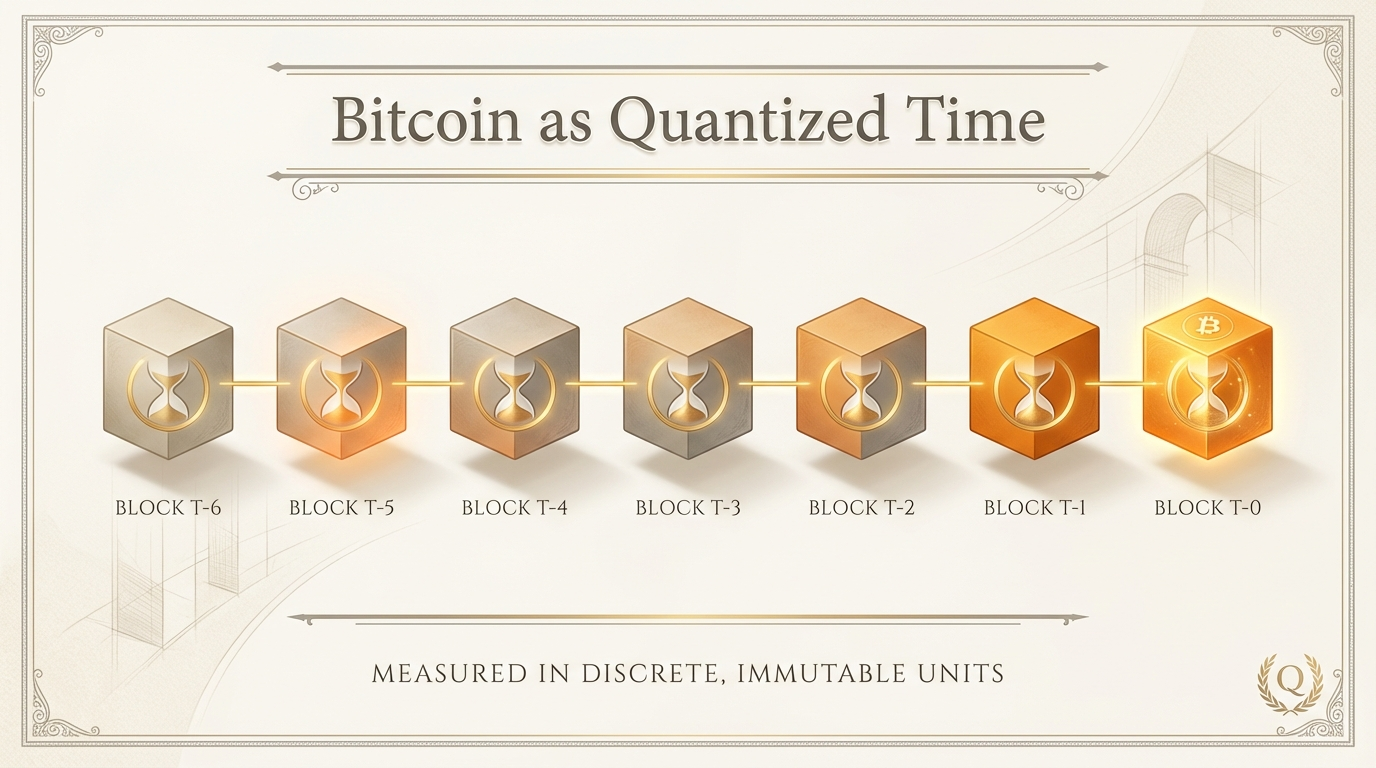
Episode #184 – On the Same Page
Episode #184 | Published February 19, 2026 | Duration: 38:24
Two independent research tracks converged on the same conclusion from different directions: Bitcoin blocks function as quantized time.
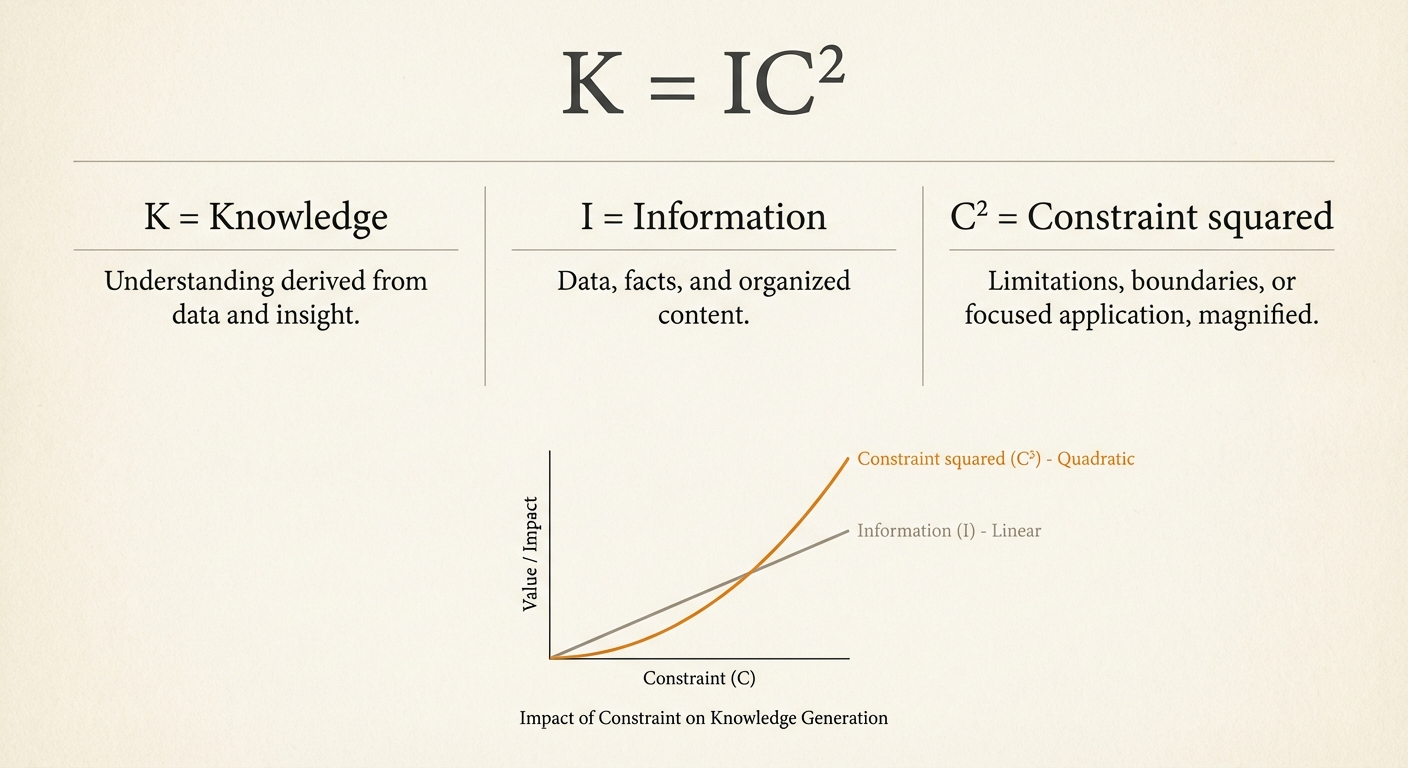
This discussion connects that convergence to K=IC² and explains why constraint quality may be the missing variable in most monetary analysis.
Episode Summary
The core claim is that Bitcoin can be understood as more than a monetary network. It can be modeled as a measurement system that discretizes events into irreversible records. Under this lens, a block is not merely data storage. It is a constrained unit of historical finality, where altering the record imposes physical cost.
That framing aligns with K=IC²: knowledge scales with both information and the square of constraint quality. More information alone does not create durable truth. The decisive variable is whether information can resist distortion while staying cheap to verify. This is why two systems with similar data throughput can have radically different epistemic quality.
The analysis then introduces Cf/Cp, the ratio of falsification cost to preservation cost, as an operational metric for monetary soundness. Systems where rewriting history is cheap and maintenance is politically mediated tend to accumulate uncertainty. Systems where rewriting history is expensive and verification is open tend to accumulate credibility.
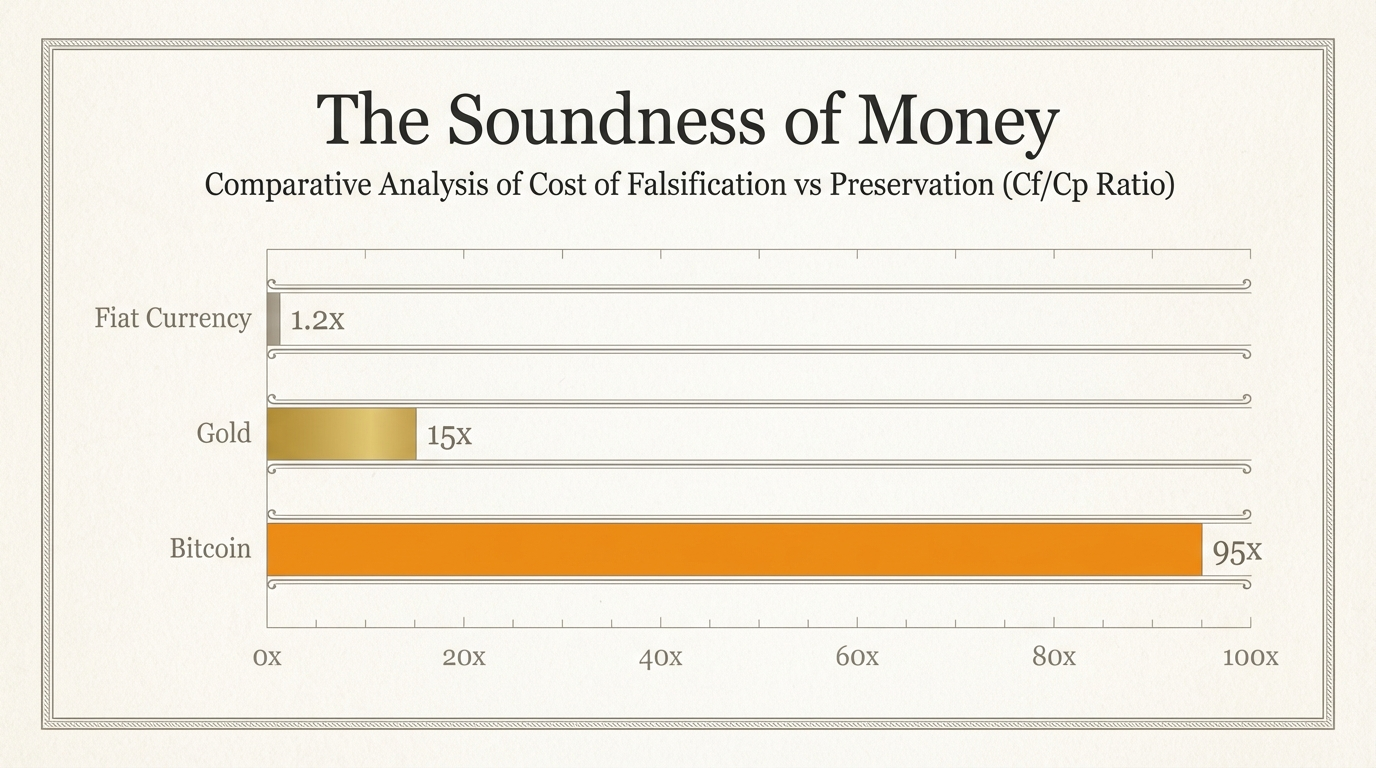
This is where the bitcoin thesis gets materially stronger. Fixed supply is not just a monetary narrative. It is a constraint architecture. Proof-of-work is not just a security mechanism. It is the physical gate that converts energy into durable record. Together, these features deepen the informational basin, making long-range capital storage more robust under stress.
The broader implication is civilizational. As digital information volume accelerates, societies that improve constraint quality will preserve more usable knowledge and make better decisions under uncertainty. Under that model, Bitcoin is not simply competing with other assets on return profile. It is competing on truth maintenance, verification economics, and institutional durability across time.
Timestamps
00:00 – Convergence between independent research paths
04:10 – Bitcoin blocks as quantized time
09:40 – Measurement versus observation
14:25 – K=IC² and why constraint quality is squared
20:05 – Cf/Cp as a universal sound-money metric
27:30 – Pizza dough analogy and constrained possibility expansion
32:40 – Implications for capital flows and monetary architecture
36:10 – Final takeaways and long-horizon framing
Topics Discussed
- Bitcoin blocks as discrete time units
- Constraint quality as the key variable in knowledge formation
- Cf/Cp ratio and monetary system evaluation
- Why scarcity is structural, not cosmetic
- Proof-of-work as physical truth anchoring
- Capital migration into high-verifiability systems
Links & References
- Episode source on Libsyn
- Preston Pysh and The Investors Podcast Network
- Quantum theory background (discrete state changes)
- Proof-of-work reference
Notable Quotes
“Bitcoin is not only sound money. It is quantized, constrained time.”
“Knowledge does not scale with information alone. It scales with constraint quality squared.”
“The ratio that matters is the cost to falsify history versus the cost to preserve it.”
Post a comment: